The Importance of Flexibility

Most novices deal specifically with stiffness, tight muscular structures, and limited range of mobility, yet flexibility is an important component of overall physical health. One of the safest and most natural ways of simultaneously increasing flexibility and calming and strengthening the body is through practicing yoga. It sequentially alleviates tight areas, promotes joint mobility, ameliorates posture, and increases equilibrium. This guide will show you fifteen easy yoga poses that will help you build a more flexible body. Each step by step guide will be carefully thought out with no room for confusion or hesitation of injury.
How Yoga Increases Flexibility
Yoga is so much more than stretching. It aids in lengthening the muscles, augmenting the range of motion in the joints, and releasing the tension that builds up from the tasks of the day. The combination of slow movements and deep, conscious breathing enables the muscles to relax, facilitating deeper stretches. Advanced yoga also encourages proper spinal alignment, which aids in posture and reduces stiffness in the back, neck, and shoulders. Yoga is based on slow, deep movements, so it is possible to gain flexibility without straining the body. Above all, yoga strengthens the mind and body connection, helping with body awareness so that the person is less likely to cause injury while stretching. In the long run, you will have a better range of motion, balance, and flexibility.
Essential Advice for the Newcomer
It is important to clear your mind and prepare your body before attempting any yoga pose. Warm-ups are a good way to loosen up the major muscle groups in your body. This also greatly decreases the risk of overheating muscles. Muscles also need to relax in a way that is safe and slow. Therefore, deep breathing should be practiced. For beginners, the major goal should be staying consistent, not getting the perfect pose. Consistent, short time stretches are way more beneficial than a long stretch that doesn’t happen very often. Flexibility is something that takes time. Therefore, do not put your body in uncomfortable positions. Using yoga props such as blocks, straps, or cushions that support your alignment can help greatly in not forcing the movements.
15 Yoga Poses for a Flexible Body
There are fifteen beginner poses designed to improve flexibility for the entire body. Each pose has step-by-step instructions and its benefits so you can fully understand how to practice and the benefits you can gain.
1. Cat-Cow Pose

Stretching the spine is essential to maintaining proper form during other poses. For this reason, it is important to begin with the Cat-Cow Pose series. Start on all fours to begin with. As you inhale, arch your back, lift your chest up, and raise your tailbone to create the Cow Pose. After this, exhale and round your spine by tucking your chin towards your chest. Draw your belly in to form the Cat Pose. Hold both in contrast for about ten to fifteen cycles and feel your back warming up. It is this type of movement that loosens neck stiffness and helps prepare the rest of the body to stretch further.
2. Downward-Facing Dog

Stretching the spine and the back of the legs is also important and so are the benefits of the Downward Facing Dog. After warming the spine up, begin on all fours and lift your hips upward, straightening your legs to form an inverted V and keeping your heel on the ground. Feet should be hip-width apart and hands should be shoulder-width apart. Hold the pose for thirty to sixty seconds while breathing gently. Improved circulation is a great mind and body benefit of this pose.
3. Standing Forward Fold

Standing Forward Fold stretches the lower back, calves, and hamstring. Standing tall, deep breath in. As you exhale, hinge your fold from the hips and fold your body forward, allowing your head and arms to dangle. If your hamstrings are tight, you can bend your knees a little. Stay in the pose for around thirty seconds, and breath slow. This position releases the tension from the spine and helps to calm the mind.
4. Seated Forward Bend

Seated forward bend is also one of the best pose for the spine and hamstring stretch. Sit and extend your legs in front of you. Inhale and elongate your spine, exhale and smoothly reach forward toward your feet. If you can’t reach your toes, and that’s expected, you can grab the your ankles or shins until your flexibility is improved. Stay in the pose for thirty to sixty seconds, keep your breath smooth and relaxed. This pose will also provide flexibility along the whole back side of body.
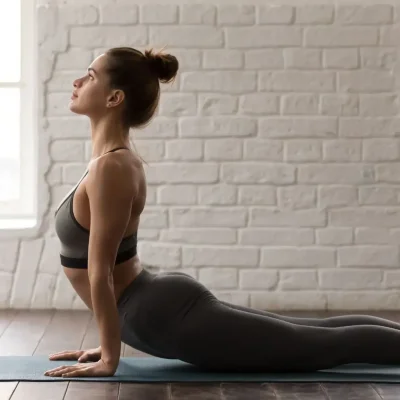
5. Cobra Pose

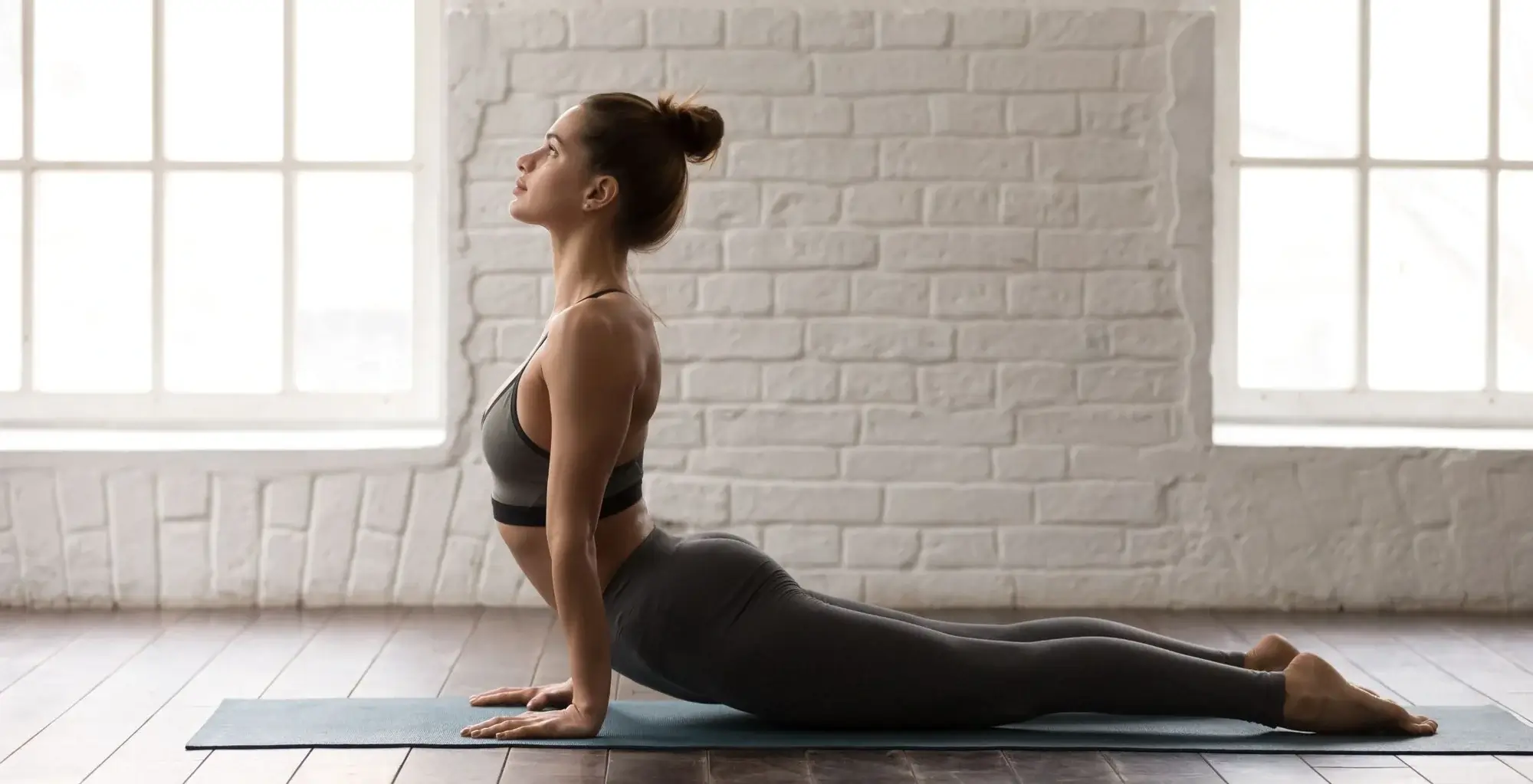
Lying on your stomach with your hands under your shoulders, you can increase flexibility in your spine by inching your chest off the floor. Inhale as you strengthen the back, don’t push with the arms. Elbows should remain bent, shoulders should stay back. Hold position for fifteen to thirty seconds. Chest can be kept open with this gentle backbend, while mobility in the spine can be further increased.
6. Bridge Pose

This is a chest, neck, and spine stretch. Bend your knees and move your feet hip-width apart as you lie back on the floor. Press your feet and arms to the floor and lift your hips, creating a bridge. Hold thirty seconds then lower. It is important to practice this exercise regularly to increase front body flexibility and core stability and to strengthen the lower back and glutes.
7. Triangle Pose

This pose is useful for stretching several body parts. This pose increases the stretch by about an arm’s length. Standing up straight, keep feet 3 to 4 feet apart. Turn your right foot outward. Leave the left foot pointed slightly inward. While keeping your arms parallel to the ground, hinge at the hips and lower your right hand to your foot (or shin). Then, lift your left arm straight up. Try to keep your back straight and your chest up. Hold this pose for about 30 seconds and switch to the opposite side. This pose is useful for enhancing balance and flexibility.
8. Extended Side Angle Pose (Utthita Parsvakonasana)

This pose increases the stretch to the hips, the sides of the body, and the shoulders. Start this pose from a standing position and take a wide step backward with your right foot. Bend your left (front) knee to a 90-degree angle. While keeping your right leg straight, place your left elbow on your left thigh to create a resting position. You can use the ground for support with your left hand. Your right arm is to be stretched straight above your body to create a nice diagonal stretch from your right hand to your right leg at the back. Hold this position for 30 seconds and switch to the opposite side. This position is useful for opening the legs and increasing flexibility on the lower body.
9. Pigeon Pose (Eka Pada Rajakapotasana)

Pigeon Pose is fantastic for stretching the hips, glutes, and lower back. Start in a Downward Dog position. Then, bring your right knee towards your right wrist. After that, extend your left leg back and square your hips. After that, bring your forearms to the mat as you lean forward. Hold this position for about 30 to 60 seconds, then switch to the other side. This position is great for releasing deeply stored hip tension as well as lower body mobility.
10. Low Lunge (Anjaneyasana)

The Low Lunge position is great for stretching your hip flexors and thighs. From a standing position, step your right leg into a lunge position while lowering your left knee to the ground. After that, you can raise your hands into the air and push your hips forward in order to deepen the stretch. Hold this position for 20 to 30 seconds.This position is particularly advantageous for people who sit down for long hours.
11. Seated Spinal Twist (Ardha Matsyendrasana)

Seated Spinal Twist increases spine mobility and provides an excellent shoulder stretch. Sit on the floor extending your legs out in front of you. Bend your right knee and cross the right leg over your left leg. Twist your torso to the right side and place your left elbow on the outside of your right knee. Keep your spine tall and breathe deeply, holding the pose for twenty to thirty seconds, and then switch to the other side. This pose releases back tension and improves posture.
12. Standing Side Stretch (Parsva Tadasana)

The Standing Side Stretch improves the flexibility of the spine and stretches the sides of the torso. Standing tall, place your feet together and raise your arms overhead as you lean to one side, holding your body in an straight line rather than bending at the torso. Hold the stretch for twenty seconds and repeat on the other side. This pose improves body alignment while eliminating stiffness around the ribs and waist.
13. Happy Baby Pose (Ananda Balasana)

Happy Baby Pose is a relaxing stretch for the hips, lower back, and thanks to the knees rolling to the side, the hamstrings also receive stretching. To do the Happy Baby Pose, lie on your back and bring your knees to your chest. Hold the outer edges of your feet with your hands and gently pull your knees outward, rolling your knees to the sides. Hold the position for about 30 seconds, breathing slowly. This also helps to release lower-back tension and encourages relaxation.
14. Wide-Leg Forward Fold (Prasarita Padottanasana)

Wide-Leg Forward Fold, also known as Prasarita Padottanasana, principally is a hamstring and calf stretch, but the main muscle spindles of the calf, to the back and even the spine, are relaxed. To do the Wide-Leg Forward Fold, stand with your feet wide apart, take a deep breath in, and as you breathe out, hinge from your hips (try to keep your spine straight) and place your hands on the floor. Hold this position for 30 to 60 seconds. This pose is incredibly effective, as it lengthens the entire backside of the body, and also assists in reducing spasms, while also improving circulation.
15. Reclining Hand-to-Big-Toe Pose (Supta Padangusthasana)

This asana is very helpful for increasing the flexibility of your hamstrings and hips. On your back, keep your left leg on the ground as you raise your right leg. If you can’t reach your right big toe, use a strap to reach your toe and hold on to them while you pull your leg toward you. Make sure to pull your leg toward you gently so you don’t over strain your leg and hold the position for 20 to 30 seconds. On your left side, repeat the same steps. This is a great exercise for individuals with tight hamstrings.